News for August 2026!
What happened in August 2026 at Phyto-info… we tell you everything!
Hello everyone 🌿
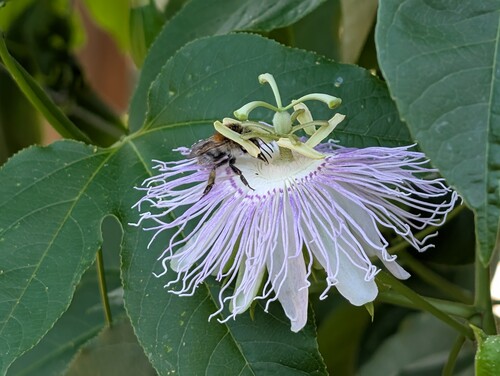
Discovered in Peru and described as early as 1569 by the Spanish botanist Nicolás Monardes in his work Historia Medicinal, the passionflower owes its nickname “passion flower” to the Spanish missionaries. They saw in its anatomy the symbols of the Passion of Christ: the petals and sepals for the apostles, the crown of filaments for the crown of thorns, and the stigmata for the nails of the crucifixion.
In reality, the passionflower is a devilish plant that hides its game well 🫣
Betrayals, poisonings, tricks… the war between certain species of passionflower and the Heliconius butterfly is nothing like Game of Thrones. To avoid being devoured, the plant secretes deadly toxins… except that the caterpillar of this butterfly, having become completely immune over generations, does not care at all. Moreover, it swallows and stores this poison to become toxic to birds itself. Ultra-territorial, this caterpillar does not hesitate for a second to devour its brothers and sisters to rule alone over its leafy territory. Facing this redoubtable attacker, some species of passionflower retaliate by growing on their leaves and tendrils false small yellow balls simulating already laid eggs. Knowing the caterpillar babies well, the future butterfly mother will take no risks with its offspring and will lay its eggs elsewhere 🤯
And passiflora and humans, what does that give?
You will have understood that not all passionflowers are medicinal. And don’t trust its pretty flower, some are toxic.
The purple passionflower was already prized by the Cherokees long before its discovery by Europeans. It was used as an infusion to soothe pain and help with sleep. In France, physicians particularly recommended it against war anxiety from 1916.
And now? What is it for? Well, we leave you to discover its properties and precautions for use on our website. Good discovery 🧐
New plant 👏
- Purple passionflower (Passiflora incarnata)
The plant’s juice now in image 👏

We wanted to add the juice to our database, that liquid from the plant that we tend to forget. And watch out for false friends, we are talking about juice here, and not sugar or sap.
To keep it simple, sap is the plant’s circulatory system. Raw sap moves up water from the roots to the leaves, while elaborated sap moves down sugars to the rest of the plant.
The juice, for its part, does not travel; it is the plant’s personal reserve. Carefully stored in the heart of the cells, the juice is generally rich in nutrients, essential oils, and active ingredients.
With generous plants, a simple incision on the stem is enough and it drains by itself. With the slightly tougher plants, you will have to use the mortar and pestle, before twisting the anther with both hands to draw out a few drops.
We have all had dandelion juice on our fingers when cutting its stem. But do you know what this juice in this plant is really for? The answer is on our website 🧐
New illustration 👏
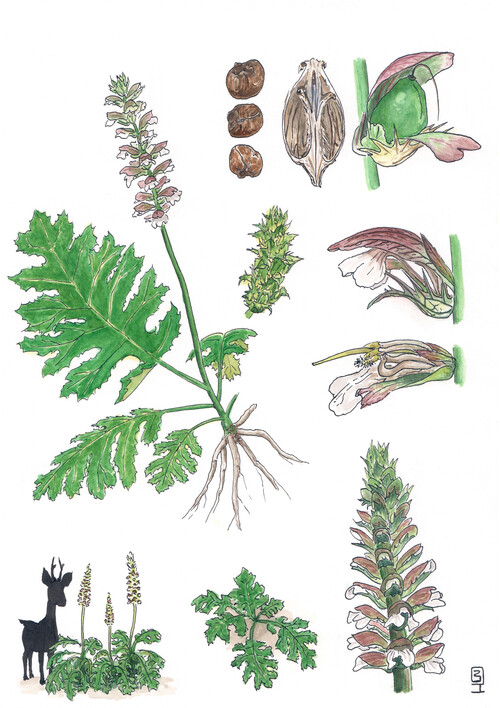
A big thank you to Hélène from the Atelier P’tites Boussoles for this superb illustration. Are you intrigued by the Bear’s breeches? (Re)dive into its dedicated plant sheet directly on our site 😊
Quick reminder❗️
We are not physicians.
At the head of the non-profit organization, Sylvie combines a passion for plants and academic rigor. Doctor in philosophy and certified herbalist after a two-year course at the École Bretonne d’Herboristerie, she instills a scientific approach into the non-profit organization’s projects. Note however that Phyto-info has a strictly informative objective, no medical advice is given.
That said, if you would like personalized support on the use of plants, Sylvie offers her services as an independent herbalist outside the non-profit organization’s framework. You can join her directly to chat with her (sylvie@thouesny.net).
🌿 🌻 🌾
That’s all for this month update; if you are interested in our search tool, more info at phyto-info.com.
To discover our search tool, head to this page.
And if you have any questions, please do not hesitate to contact us 🤗
Next newsletter in a month! Stay tuned!