October 2024 news!
What happened in October 2024 at Phyto-info… we tell you everything!
Hello everyone 🌿
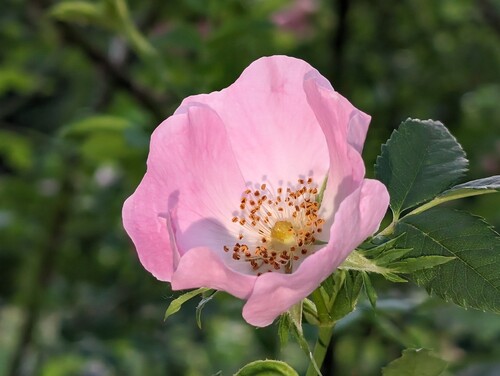
Here is a thorny subject, the rosebush 🥰. Botanists count more than 70 species, including about forty in the wild in Europe alone. And here we are not talking about the different varieties, they are innumerable. To put it simply, roses are classified into three main categories: wild and cultivated, and among cultivated, red and pale. This month we are focusing on wild roses, also known as rosehips.
Much more than just flowers with their five small petals, wild roses crossed and hybridized over the centuries are at the origin of all the cultivated roses that we admire in our gardens. True jewels of nature, they are essential pillars of the ecosystem. Their flowers, rich in nectar, attract a multitude of pollinating insects while their fruits offer a feast for birds, not to mention their benefits for the human being that we are.
Although there are a multitude of varieties of wild roses, often difficult to distinguish one from the other even for specialists, “from a medicinal point of view, these distinctions are unimportant” (Fournier). Whether it is a field rose, a forest rose, a dog rose… wild roses all have the same talents. Of course, it will be difficult to find information on the apple rose or the tomato rose in the books, the most documented being the dog rosebush. But for the therapeutic benefits a wild rose is a wild rose, discover our small selection below 👏.
Added plants 👏
- Field rose (Rosa arvensis)
- Cherokee rose (Rosa laevigata)
- Alpine rose (Rosa pendulina)
- Burnet rose (Rosa pimpinellifolia)
- Sweet briar (Rosa rubiginosa)
- Tomato rose (Rosa rugosa)
- Apple rose (Rosa villosa)
Discover their traditional uses and terms of use on our platform.
Updates 👏
With this update, we explore the uses of dog rose, the best-documented wild rose species, across the Atlantic.
- Dog rose (Rosa canina)
Re-discover its benefits and precautions for use on our platform.
Celebration 👏
We passed the 60 plant mark this month, next goal… 70 🎉 Regarding the addition of plants, we remind you that we give our members the possibility to choose the plants to include in our search tool; do not hesitate to let us know your preferences by email.
New books 👏
- Pierre, M. (1982). Les plantes de l’herboriste: recettes vertes, recettes douces pour mieux vivre. Robert Jauze.
- Rombi, M. (1998). 100 plantes médicinales: composition, mode d’action et intérêt thérapeutique. Éditions Romart.
We ended up making a list of all our books. If you have ideas to enrich our collection, we are interested 🤗
Board of Directors 👏
The Phyto-info team met by videoconference on October 7, at 10 am to discuss our social networks. Your privacy is our priority. We just want you to be able to search our database with peace of mind. That’s why we chose not to follow you and to close our accounts on social networks. Our subscribers will be encouraged to subscribe to our newsletter to continue the adventure with us! Read our minutes for more details.
🌿 🌻 🌾
This was our October news item; if you are interested in our search tool, more info at phyto-info.com.
To discover our plant finder, head to this page.
And if you have any questions, please do not hesitate to contact us 🤗
Next newsletter in a month! Stay tuned!